Show in browser
Wuppertal Institute‘s Transformation Update
Dear Readers,

German media is currently dominated by dire reports on the German and European economies: traditionally strong industrial sectors are losing ground, new green technologies have yet to take off – and despite all this, we are still lagging behind on our climate targets. Media outlets paint a bleak picture of both the present and the future.

The situation is tense, no doubt about it. But what columnists and editorial writers almost completely neglect are the ample opportunities and leverage points lying dormant on the old continent. And our recent findings once again prove that we are talking significant potential here – but to tap into it, the private sector needs a reliable political framework above all else.

Take the European chemical industry, for example: it has been struggling with high energy and raw material costs for years – and these cost disadvantages are becoming increasingly pronounced. Without massive investment in innovative technologies, they can no longer be offset, write our researchers in the paper "Unpacking Competitiveness: Shaping Markets as the Way Forward for the European Chemical Industry". Their conclusion: whilst the European chemical industry still possesses a high capacity for innovation, what’s crucial now is a stable political framework to ensure planning security for strategic investments.

The challenges facing the steel industry can be described as "same but different": the decisive factor in steel production is no longer developing eco-friendly production methods, but rather establishing the right investment conditions and demand signals necessary to scale up green steel production. Standards for low-carbon steel are therefore of vital importance. Only with a clear definition of what will be considered low-carbon steel in the future can steel producers differentiate their products from traditional competitors to develop viable business cases – which in turn form the basis for the forthcoming billion-euro investments in environmentally friendly steel production. So write Dr. Chun Xia-Bauer, Dr. Lukas Hermwille and Dr. Anna Leipprand in the policy brief "Green Steel, Shared Rules? A Closer Look at Low-Carbon Steel Labels in China and Europe". Here again, the potential for sustainable growth is there; what’s needed now is a solid foundation, cast from political reliability.

What happens when this foundation goes missing is illustrated by Dr. Lukas Hermwille in the article "The Price of Uncertainty: Even cosmetic reforms to emissions trading can jeopardise the structural integrity of Europe’s climate policy architecture": using a recent example from Germany, he demonstrates that even political statements with no concrete consequences for the European emissions trading system can compromise the markets' confidence – with direct repercussions on the share prices of pioneering companies that have already invested billions in transitioning to climate neutrality. That Hermwille is not spouting unworldly theories from the ivory tower is impressively underlined by the industry itself – for example, at today’s Steel Industry Action Day organised by IG Metall Völklingen: under the slogan "Push through the transformation!", steelworkers are calling for the EU-ETS to be retained as is, arguing that any weakening of the scheme would create significant planning uncertainties that could jeopardise the very survival of the Saarland steel industry.

Conversely, a major hydrogen contract between regional German energy provider EWE and steel manufacturer Salzgitter demonstrates that through spirited partnerships, pioneering green deals remain well within reach: EWE will supply 10,000 tonnes of green hydrogen annually for the Salcos programme (Salzgitter Low CO2 Steelmaking), through which Salzgitter aims to reduce its direct CO2 emissions by 95 per cent. The deal clearly shows that major steps towards economic sustainability can be taken – provided business and politics pull together.

A broader perspective on competitiveness is provided by Prof. Dr. Peter Hennicke, Dr. Monika Dittrich and Janine Dierk in the Wuppertal Paper "Revisiting Competitiveness – Acknowledging the Economic Benefits of Climate Mitigation and Circularity": the researchers show that measures to combat climate change, promote circular economy and reduce resource consumption offer significant economic growth prospects – which are becoming increasingly scarce in the "old" fossil sectors.

How such an approach can be implemented in the context of the circular economy is laid out by Burcu Gözet, Giacomo Sebis and other researchers in the report "A just transition to a circular economy: Operational framework and indicators": the authors present an indicator-based framework for policymakers, demonstrating that a sector-sensitive approach that emphasises social equity is indispensable for monitoring a just transition to a circular economy.

Wishing you an interesting read,
Christian Kensbock
 
Topic: Highlights & Updates
 
EU Emissions Trading System: The Price of Uncertainty

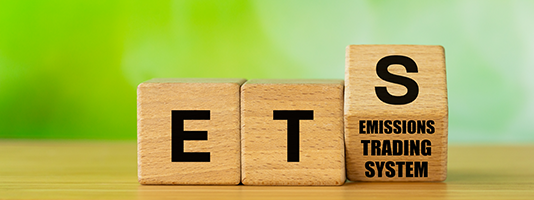
In the current debate on reforming the EU Emissions Trading System, calls for relief for the industry are growing louder. But caution is advised: anyone who weakens the EU ETS in order to support short-term margins risks undermining the stability of Europe’s entire climate policy architecture – so writes Dr. Lukas Hermwille, Co-Head of the Transformative Industrial Policy Research Unit at the Wuppertal Institute, in an article published in "VIK-Mitteilungen", the official journal of the German Association of Industrial Energy Consumers.

read the article
 
Design Science Research Guide: Bridging the Gap between Research and Practice

Interconnecting creative processes, science and practical application: researchers at the Wuppertal Institute demonstrate in a specialist article how Design Science Research (DSR) can be integrated into creativity and innovation research. DSR enables not only the development of theories, but also concrete solutions – such as tools, methods or models that can be used directly in companies, start-ups or other organisations. As a result, the researchers present the DeepDSR Guide, a structured decision framework for researchers.

more on the DeepDSR Guide
 
Wuppertal Institute Publishes its AI Policy

In order to seize the main opportunities afforded by AI while simultaneously minimising the risks associated with its use, the Wuppertal Institute has developed its own AI policy. It came into effect at the end of March 2026 and sets out guidelines for the thoughtful, transparent and responsible use of AI in the Institute’s day-to-day work.

read the AI Policy
 
Topic: Climate Protection & Adaption
 
Lessons from GST1 and latest NDCs: Report Published 

Researchers from the think tank IDDRI and the Wuppertal Institute assess how the outcomes of the first Global Stocktake (GST) translate into national climate policies: They analyse the legal strength of mitigation-related GST provisions, review literature recommendations for incorporating GST outcomes into Nationally Determined Contributions (NDCs), and evaluate whether countries are operationalising these recommendations. On this basis, they deliver insights for GST2 and future NDC cycles.

read the report
 
Revisiting Competitiveness Acknowledging the Economic Benefits of Climate Mitigation and Circularity

Competitiveness is often regarded the main objective in economic and industrial policy. However, the Wuppertal Paper "Revisiting Competitiveness Acknowledging the Economic Benefits of Climate Mitigation and Circularity" shows that this definition is too narrow: measures to promote climate protection, the circular economy or lower resource consumption also increase the contribution of environmental technologies to overall economic growth – whilst fossil fuel-based and resource-intensive sectors lose ground.

download the Wuppertal Paper
 
Education-Driven Solutions for Youth in Climate Action

In a workshop, practitioners, educators, researchers, and project representatives discussed ways to empower young people to take action on climate change and the energy transition. The focus was on strategies for engaging young people, the relevant skills and knowledge required, educational approaches as well as the role of schools.

read more
 
Topic: Shaping the Energy Transition
 
Biomass-Based Energy System for Multi-Family Buildings

In the Micro-Bio-CHP project, researchers developed a novel, highly efficient renewable energy system designed to enable a nearly energy-autonomous supply of heat and electricity for multi-family homes, including electromobility. The system was validated under close-to-real-life conditions and reached Technology Readiness Level 5 (TRL 5). All project publications are available to download free of charge.

read the news
 
Advancing Gender Equality in Just Energy Transitions

Which gender-specific challenges need to be addressed to ensure a just energy transition in carbon-intensive regions? Researchers from the Wuppertal Institute explored this question in a series of international webinars featuring leading experts in the field. A key outcome of the webinar series is the establishment of an international network of specialists focusing on gender issues and just transition.

read more
 
First Conference on Transitioning Away from Fossil Fuels: Briefing Published

From 24 to 29 April 2026 the First Conference on Transitioning Away from Fossil Fuels (TAFF) took place in Santa Marta, Columbia. On behalf of the European Parliament, Juliane Schell, Max Schulze-Steinen and Wolfgang Obergassel from the Energy, Transport and Climate Policy Research Division at the Wuppertal Institute produced a briefing on the conference.

discover the briefing
 
Topic: Industry Transformation
 
Steel industry
Securing the Competitiveness of the European Chemical Industry

Historically, the EU’s chemical industry managed to offset the disadvantages of high energy and raw material costs through industrial symbiosis in "Verbund"-clusters, in which one company’s waste becomes another’s feedstock. These clusters, however, are largely dependent on fossil-based feedstocks. To keep the chemical industry competitive in a decarbonised economy, specialty chemicals must be decoupled from fossil raw materials, write Dr. Lukas Hermwille and Miriam Ruß in their paper "Unpacking Competitiveness in the European Chemical Industry: Shaping Markets as the Way Forward".

download the paper
 
Green Steel, Shared Rules? Comparing Standards for
Low-Carbon Steel in Europe and China

Only with a reliable framework and clearly defined standards for what will be considered low-carbon steel in the future can steel producers develop viable business cases – and these, in turn, form the basis for the forthcoming billion-euro investments in climate friendly steel production. By comparing the European LESS standard with China’s "C2F Steel" standard, researchers at the Wuppertal Institute show why aligned standards are necessary for the creation of lead markets for low-carbon steel.

read the policy brief
 
Topic: Resources & Circular Economy
 
Data Infrastructures as a Key Resource for the Circular Economy

The ability to use, repair and recycle products for longer depends on one thing above all else: reliable data. In a new In Brief, Prof. Dr.-Ing. Stephan Ramesohl and Dr. Holger Berg from the Wuppertal Institute’s Circular Economy Research Division explain why digitisation is crucial for a functioning circular economy – and introduce the Circular Economy Information Ecosystem (CEIS).

download the In Brief
 
Report "A Circular Plastics Economy and Human Rights"

In a report submitted to the UN Office of the High Commissioner for Human Rights, Giacomo Sebis and Charlotte Hullmann compare the social and environmental consequences of linear and circular plastic supply chains. They point out the potential of circular supply chains: if implemented correctly, they reduce health risks and create new employment and income opportunities.

read the report
 
A Fair and Inclusive Circular Economy

In their report "A just transition to a circular economy: operational framework and indicators", Burcu Gözet and Giacomo Sebis from the Wuppertal Institute's Circular Economy Research Division demonstrate that many social impacts of circular strategies have so far been overlooked – and that the transition to a circular economy must be designed in a socially just manner. In their report, they suggest an operational framework based on concrete indicators.

read the report
 
Topic: Digital Transformation
 
Digital GreenTalents Award: Sustainability x Digitalisation

The German Federal Ministry of Research, Technology and Space sponsors the competition "Digital GreenTalents – High Potentials in Sustainable Development" to promote the international exchange of innovative ideas at the intersection of digitalisation and sustainability. The high-profile jury consists of renowned experts, including Prof. Dr. Henning Wilts, Director of the Wuppertal Institute’s Circular Economy Research Division.

read the news
 
Website of the Wuppertal Institute
News & Press Releases
Events

Website

Newsroom

Events

 
 Google  Linkedin  Flickr  Instagram  Youtube
 

Wuppertal Institute for Climate, Environment and Energy

Responsible for content: Prof. Dr. Manfred Fischedick, President and Scientific Managing Director
Contact: Christin Hasken, Head of Communications
Döppersberg 19 | 42103 Wuppertal | Tel. +49 202 2492-187
Email: pr@wupperinst.org | Website: wupperinst.org

> Imprint on the website of the Wuppertal Institute
> Privacy Policy on the website of the Wuppertal Institute


If you would like to unsubscribe from the press mailing list, please click here. Otherwithe you can adjust your current settings via this link.