Show in browser
Wuppertal Instituteā€˜s Transformation Update
Dear Readers,

Whenever we produce rubbish – as we all do – there are a whole range of possible outcomes: at worst, human rights violations if waste is exported without thoughtful regulation; at best, a circular economy that finds new purposes for what was once considered useless. What actually happens depends very much on where the waste occurs – or rather where it ends up: Whilst litter in countries of the Global South can have a direct impact on fundamental human rights, as Giacomo Sebis and Charlotte Hullmann write in their study "A Circular Plastics Economy and Human Rights", in industrialised nations the focus is more on whether raw materials can be extracted from waste, or whether biogas can be produced from it as a sustainable energy source. And the potential is enormous: approaches such as these can help transform European heavy industry into a carbon sink – and, according to the study "A strategic path for EU industry", this could result in an impressive 57 megatonnes of negative emissions as early as 2050.

However, our researchers are not just focusing on our own European backyard; they also develop hands-on solutions to the problems facing the Global South: with the "ReMal Waste Observatory", they have created an open access platform to support robust data collection and the development of solid waste master plans for key coastal areas in Lebanon – and thus to combat the discharge of waste into the sea. Against this backdrop, Jamia Laber, Graduate Research Assistant in the Circular Systems Research Unit, explored current waste management systems in the Beirut and Mount Lebanon region as part of her Master’s thesis "Solid Waste Management in Beirut and Mount Lebanon", and outlines how the informal sector – i.e. waste pickers – can be integrated into these systems.

Clearly, the issue of waste is a complex one, ranging from human rights to the visible refuse problems in the Global South to a means of extracting valuable resources and securing energy supplies in highly developed industrialised countries. Consequently, there is no one-size-fits-all solution. However, what we at the Wuppertal Institute can provide, apart from the aforementioned, context-specific research, are overarching insights such as those in the open access book "Rethinking Sustainability: Principles and Practice", recently published at Springer Nature. With the chapter "Sustainable Consumption – Foundations and Insights into a Sufficiency-Oriented Circular Economy", Dr. Kathleen Jacobs has contributed a further approach that can help us not only in tackling our current waste issues: Designed as a hybrid publication, the book combines pedagogical features with the thematic depth of a scholarly edited volume, informing practitioners and policymakers as well as educators and students. And thus, the decision-makers of tomorrow.

Wishing you an interesting read,
Christian Kensbock
 
Topic: Highlights & Updates
 
Clemens Rohde Elected to eceee Board

Prof. Dr.-Ing. Clemens Rohde, Director of the Future Energy and Industry Systems Research Division, has been re-elected to the board of the European Council for an Energy Efficient Economy (eceee). In addition, Rohde was also elected Vice-President of the eceee and took on the role of Editor-in-Chief of energydemand.org, the eceee’s new scientific journal.

read the news
 
Topic: Climate Protection & Adaption
 
Strengthening the Global Stocktake and Nationally Determined Contributions

In their report "Lessons from GST1 and latest NDCs", Victoria Brandemann, Lara Vogel, and Wolfgang Obergassel from the Global Climate Governance Research Unit examine how the results of the first Global Stocktake (GST1) under the Paris Agreement translate into national climate protection commitments and measures, assessing whether and to what extent countries implement the GST recommendations.

read the report
 
Topic: Resources & Circular Economy
 
ReMal Waste Observatory: Data from Six Coastal Zones in Lebanon is now Online

The open access platform "ReMaL Waste Observatory" provides comprehensive waste data from six key coastal areas in Lebanon, allowing stakeholders, partners, and the public to easily access deep-dive data on waste composition, collection coverage, and material flows. The project aims to identify systemic gaps, assess infrastructure capacity and facilitate future investment.

learn more about the ReMal Waste Observatory
 
Solid Waste Management in Lebanon

Solid waste management in Lebanon faces persistent challenges: limited infrastructure, weak policy reinforcement, and the exclusion of the informal sector. Against this backdrop, Lamia Jaber from the Circular Systems Research Unit explored current waste management systems in the Beirut and Mount Lebanon region, presenting four approaches for integrating the informal sector into waste management systems in her Master’s thesis.

read the study
 
Plastic Pollution is a Human Rights Issue

In their report "A Circular Plastics Economy and Human Rights", Giacomo Sebis and Charlotte Hullmann examine the implications of plastic pollution for the full enjoyment of human rights through a comparison of linear and circular plastics supply chains. They point to circular plastic supply chains as a possible solution: these could help cut down virgin plastic use, thereby reducing the burden of plastic waste and the associated health risks.

read the report
 
Rethinking Sustainability – Principles and Practice

The open access book "Rethinking Sustainability – Principles and Practice", recently published at Springer Nature, introduces innovations in how sustainability is studied, taught, and practiced across academic and professional contexts. Dr. Kathleen Jacobs from the Circular Society Research Unit has contributed the chapter "Sustainable Consumption: Foundations and Insights into a Sufficiency-Orientated Circular Economy".

download the book
 
Topic: Industry Transformation
 
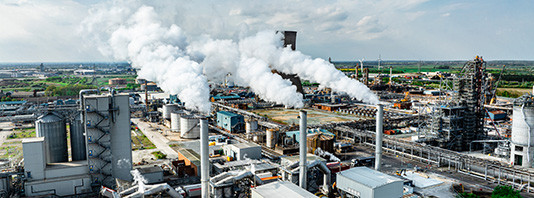
How Europe’s Industry can Become a Carbon Sink

The EU’s steel, cement and chemical industries are heavily dependent on fossil fuels and raw materials, making them vulnerable to market fluctuations and other geopolitical risks. The study "A strategic path for EU industry" shows that a three-pillar strategy at EU level could not only drastically reduce import dependencies, cushion the impact of global price shocks and open up new markets worldwide, but also enable EU heavy industry to remove as much as 57 megatonnes of CO2 from the atmosphere in 2050.

read the study
 
Topic: Digital Transformation
 
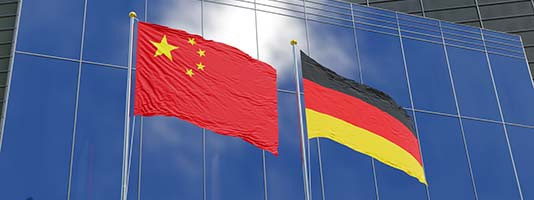
Energy Transition in Germany and China: Comparative Study Published

As part of a six-day study visit to North Rhine-Westphalia and Amsterdam organised for Chinese energy experts, researchers from the Wuppertal Institute and the China Electricity Council (CEC) presented the study "Comparison analysis and cooperation potentials study for Energy Transition in North Rhine-Westphalia, Baden-Württemberg and Jiangsu, Sichuan", providing a comparative analysis of the energy transition in Germany and China.

read the study
 
Topic: Digital Transformation
 
A Moratorium on EU Digital Legislation is Not a Solution

Prompted by the final report of the German Commission on Competition & Artificial Intelligence, the German Council for Consumer Affairs published a statement entitled "A Moratorium on EU Digital Legislation is Not a Solution", advocating support for the proposal for a Digital Fairness Act (DFA) announced by the European Commission for the end of 2026.

read the statement
 
Topic: Arts & Culture
 
Sustainability Assessment for the Performing Arts

The Greenstage project promotes sustainability within the performing arts. In collaboration with local authorities, the aim is to enable cultural organisations to implement environmental sustainability effectively. A key focus is on embedding circular stage design into production practices – among other things, using the SAPA (Sustainability Assessment for the Performing Arts) tool developed by researchers at the Wuppertal Institute.

read the news
 
Website of the Wuppertal Institute
News & Press Releases
Events

Website

Newsroom

Events

 
 Google  Linkedin  Flickr  Instagram  Youtube
 

Wuppertal Institute for Climate, Environment and Energy

Responsible for content: Prof. Dr. Manfred Fischedick, President and Scientific Managing Director
Contact: Christin Hasken, Head of Communications
Dƶppersberg 19 | 42103 Wuppertal | Tel. +49 202 2492-187
Email: pr@wupperinst.org | Website: wupperinst.org

> Imprint on the website of the Wuppertal Institute
> Privacy Policy on the website of the Wuppertal Institute


If you would like to unsubscribe from the press mailing list, please click here. Otherwithe you can adjust your current settings via this link.